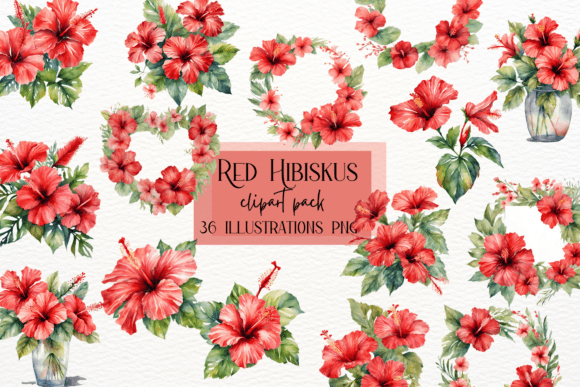
Watercolor Red Hibiscus Clipart: A Tropical Design Essential
There’s a particular energy that watercolor brings to a design project. It’s organic, slightly unpredictable, and full of life. When that medium is used to capture the bold, iconic shape of a red hibiscus flower, the result is more than just a pretty picture—it’s a versatile design asset. The Watercolor Red Hibiscus Clipart collection isn't just a set of images; it's a toolkit for injecting instant tropical warmth and professional artistry into your work. For creators ranging from brand strategists to hobbyist crafters, understanding how to leverage such assets is key to elevating a project from ordinary to memorable.
More Than a Flower: The Visual Language of the Hibiscus
Before diving into applications, it’s worth appreciating what makes this specific clipart collection stand out. The red hibiscus is a powerful symbol. It speaks of paradise, relaxation, passion, and vibrant summer days. The watercolor style amplifies this, adding texture, soft gradients, and a hand-painted authenticity that digital vectors often lack. Each of the 36 illustrations in this collection carries a unique character—some might show delicate brushstrokes, others a more saturated, confident wash of color.
This visual personality is crucial. In design terms, the hibiscus acts as a display font for your imagery. It’s bold, expressive, and meant to catch the eye. It has the confidence of a strong serif font but the approachable, organic feel of a script font. The red hue, in particular, commands attention and evokes emotion, making it a strategic choice for projects that need to make a strong impression. The PNG format with a transparent background is the practical backbone of this, allowing you to layer these blooms over any color, texture, or photograph without cumbersome editing. The high resolution (1500px) ensures they remain crisp even when resized for larger print applications, like posters or packaging.
Practical Applications: Where Tropical Charm Meets Strategy
The true value of a design asset lies in its adaptability. This Watercolor Red Hibiscus Clipart collection is a workhorse for a surprising range of projects. Let’s move beyond the obvious and think like a designer solving real problems.
For brand identity and logo design, a single, well-placed hibiscus can become the cornerstone of a visual system for businesses in wellness, hospitality, beauty, or food. Imagine a spa’s menu, a cocktail bar’s signage, or a boutique’s hang tags. The flower provides an instant, recognizable motif that can be carried across packaging design, social media, and web design to create cohesion. It’s far more distinctive than a generic icon.
In editorial design and publishing, these illustrations are gold. They can create stunning chapter headers in a cookbook, accentuate margins in a travel magazine, or serve as the central theme for a blog’s featured image. For social media graphics, the hibiscus is a engagement driver. It stops the scroll. Use it as a vibrant background element for a text overlay, frame a product photo with a cluster of blooms, or create a series of cohesive Instagram stories. The collection’s variety means you won’t repeat the same image, maintaining a fresh yet consistent feed.
For creative font pairing, think of the hibiscus as a companion to your typography. It pairs beautifully with clean, modern sans serif font families for a balanced, contemporary look. For a more romantic or whimsical feel, combine it with a elegant script font. The key is to let the flower’s organic shape complement the letterforms, not compete with them. Test pairings by placing a hibiscus next to your chosen typeface—their styles should feel like they belong in the same story.
Making the Asset Work for You: A Creator's Checklist
Acquiring the asset is step one. Integrating it effectively is where your expertise as a creator comes in. Here’s a practical framework for using this collection:
- Evaluate the Fit: Does the project’s tone align with the hibiscus’s personality? It’s perfect for themes of summer, nature, beauty, celebration, and relaxation. It might be less suited for corporate finance or industrial tech, unless used in a very subtle, abstract way.
- Test for Readability and Hierarchy: When overlaying text on a hibiscus image, ensure sufficient contrast. Use the flower as a background element behind solid-colored text boxes, or choose areas of the illustration that are lighter. The goal is to maintain the visual hierarchy where your message remains clear.
- Consider the Scale and Composition: A single bloom makes a elegant focal point. A scattered arrangement creates texture and movement. A dense border or frame creates bold impact. Think about how the composition guides the viewer’s eye.
- Review the Collection’s Range: With 36 illustrations, you have options. Some may be more detailed, others more abstract. Some might have visible stems or leaves. Selecting the right variation for each application shows thoughtful curation.
- Understand the Licensing: This is non-negotiable for professional use. The listing details what’s permitted. For commercial font and asset use, clarity is essential. Ensure the license covers your intended application, whether it’s for client work, products for sale, or digital goods.
Ultimately, the Watercolor Red Hibiscus Clipart is a premium piece of your design assets library. It’s a creative font in visual form—one that adds a specific, desirable flavor to your projects. Its strength lies in its ability to convey a mood instantly and professionally. By treating it not as a mere decoration but as a strategic element in your visual toolkit, you can craft designs that are not only beautiful but also effective and cohesive. The collection gives you the variety to maintain that professionalism across multiple touchpoints, ensuring your brand or project feels both vibrant and reliably consistent.
Thank you for visiting. Your support makes this creative journey possible.
Aneta & Filip